ServicesFilter replacement and maintenance
Filter Replacement and Maintenance in Sunnyvale
A filter only works until it's full. We change cartridges, swap RO membranes, check seals and pressure, and keep a simple record for your home. The same person who answers your call schedules the visit and lets you know when the next one is due.
Keeping the system you already have working
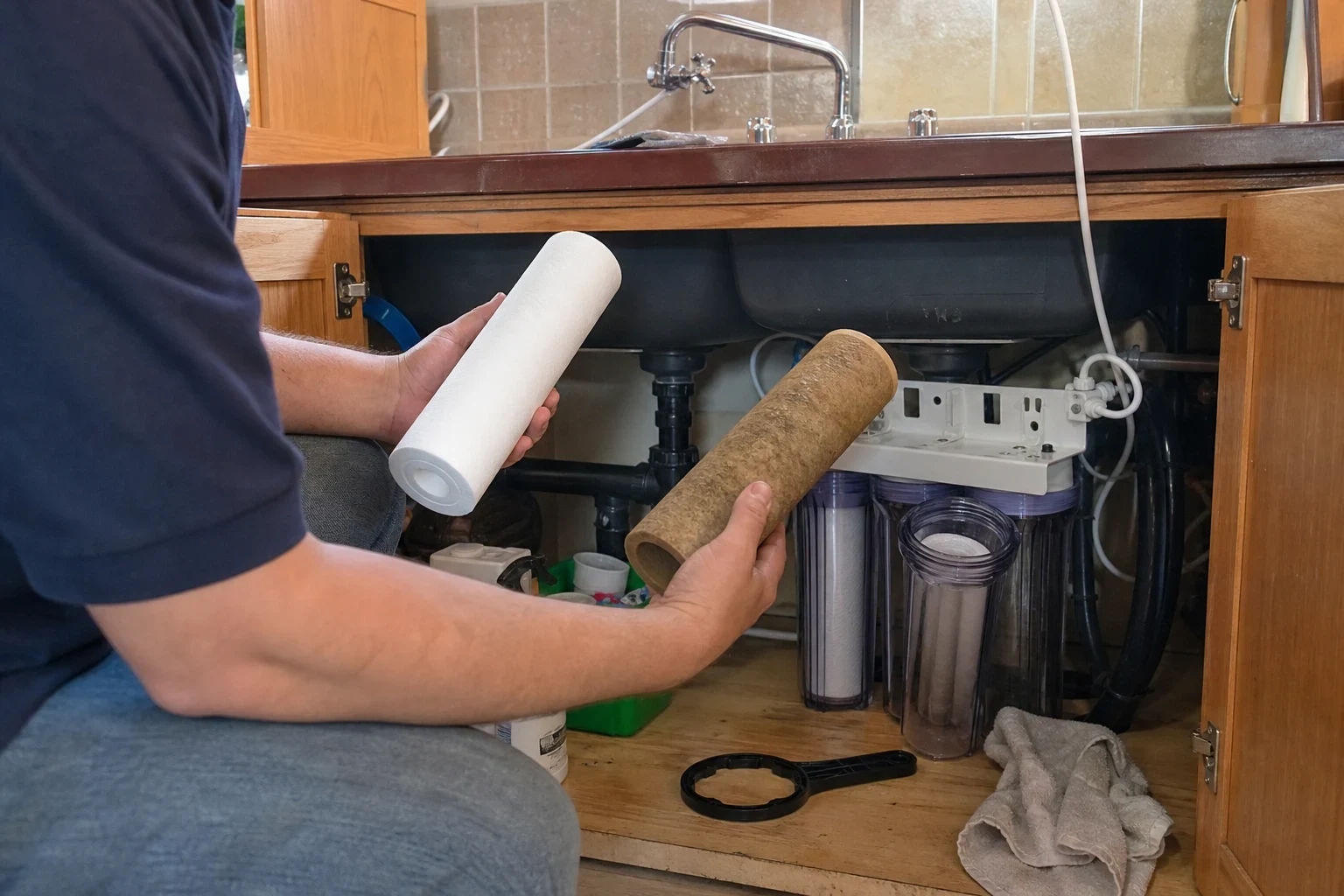
Most filtration problems are not broken equipment. They're overdue filters. A sediment cartridge packed with grit slows your water pressure. A spent carbon block lets chlorine taste creep back in. An old RO membrane keeps producing water, just not water that's been filtered as well as you think.
Filter replacement and maintenance is the routine side of what we do. We service under-sink reverse osmosis units, whole-house carbon and sediment systems, iron filters and softeners. You get one contact for all of it. You tell one person what you have, and that same person keeps track of what's due and when.
What we check and change on each visit
Fresh cartridges and membranes
Old sediment, carbon and polishing filters come out, and new ones go in that match your housings in both size and micron rating. If your RO unit's output or water quality has slipped, we test the membrane and swap it.
Seals and O-rings
Every housing O-ring is inspected, cleaned and lubricated with food-grade silicone. Any O-ring that's flattened or cracked gets replaced, since a tired seal is the most common cause of slow drips under a sink.
Housing sanitizing
When a system is well past due, we sanitize the housings before the new filters go in. That way fresh cartridges aren't sitting in old buildup.
Flush and pressure test
Brand-new carbon sheds a little black powder the first time water moves through it. We run each stage until the water comes out clear, then bring the system back up to pressure and watch every fitting for a few minutes before we pack up.
Softener and iron filter check
For softeners we look at salt level, break up any salt bridge in the brine tank and confirm the regeneration settings. For iron filters we check the backwash cycle and media.
A dated record
We label each housing with the change date. You also get a short note listing what was replaced and what's likely due next.
Signs your filters are overdue
Pressure has dropped
A clogged sediment or whole-house filter restricts flow to every tap. The shower feels weaker first.
The chlorine taste is back
Carbon only grabs chlorine while it still has open surface to hold it. Once your tap water picks up that swimming-pool smell or flavor again, the carbon has nothing left to give.
Your RO water trickles out
Waiting a long time for a single glass from the drinking water tap is a common clue. So is a storage tank that runs dry quickly. Both usually trace back to clogged prefilters or a membrane near the end of its life.
You can't remember the last change
If no one knows when the filters were last replaced, it has probably been too long. That's especially true in a home you bought with the system already installed.
Drips or damp cabinets
Moisture under the sink or around a housing often means a worn O-ring or a housing that wasn't seated properly last time.
How a filter visit works
- 1
You call and tell us what you have
Describe your system and where it sits in your home. If you know the brand or model, great. If not, we'll figure it out on site.
- 2
We confirm parts and a time
We make sure we're bringing the right filters for your housings. Then we set a visit time that works for you, and the same person handles any questions before the day.
- 3
The service itself
We shut off the water to the system, open the bypass if there is one and lay down towels before opening anything. Filters are changed, seals checked, housings sanitized when needed, and each stage flushed. Most single-system visits are a short job.
- 4
Check, clean up and next date
We run water, check for leaks, wipe out the cabinet and take the old cartridges with us. Before we leave, you'll know what was done and roughly when the next change is due.
What affects the cost of maintenance
The price depends on what you have and how long it's been. We tell you the cost on the phone or before any work begins, so the total at the end isn't a surprise. If we find something beyond a routine change, we explain it and you decide.
- Number of stages and systems
- A single whole-house cartridge is simpler than a five-stage RO unit plus a softener. Each filter and membrane is its own part.
- Filter type and availability
- Standard-size cartridges are easy to source. Proprietary filters for some brands cost more and sometimes have to be ordered ahead.
- How overdue the system is
- Long-neglected systems may need housing sanitizing, a new membrane or replacement O-rings rather than cartridges alone.
- Access and condition
- A housing in a tight cabinet or a cramped garage corner takes longer. Stuck or cracked housings may need replacing.
Filter maintenance questions
Something not covered here? (972) 597-4653
How often do filters need changing?
Filters don't all wear out on the same schedule, and a family of five uses them up quicker than one or two people do. As a rough guide, RO prefilters are often changed every six to twelve months and RO membranes every few years. Whole-house carbon and sediment cartridges vary widely with size and use. We'll give you an interval based on your actual system.
Will you service a system you didn't install?
Yes, in most cases. Many people call us after buying a home with a system already in place. If we can get the right filters for it, we'll service it, and if parts are hard to find, we'll tell you before the visit.
Can I just change the filters myself?
You can, and some people do. The usual trouble spots are pinched O-rings, overtightened housings and skipping the flush on new carbon. If you'd like us to handle it once and show you how, we're glad to.
My water still tastes off after new filters. Now what?
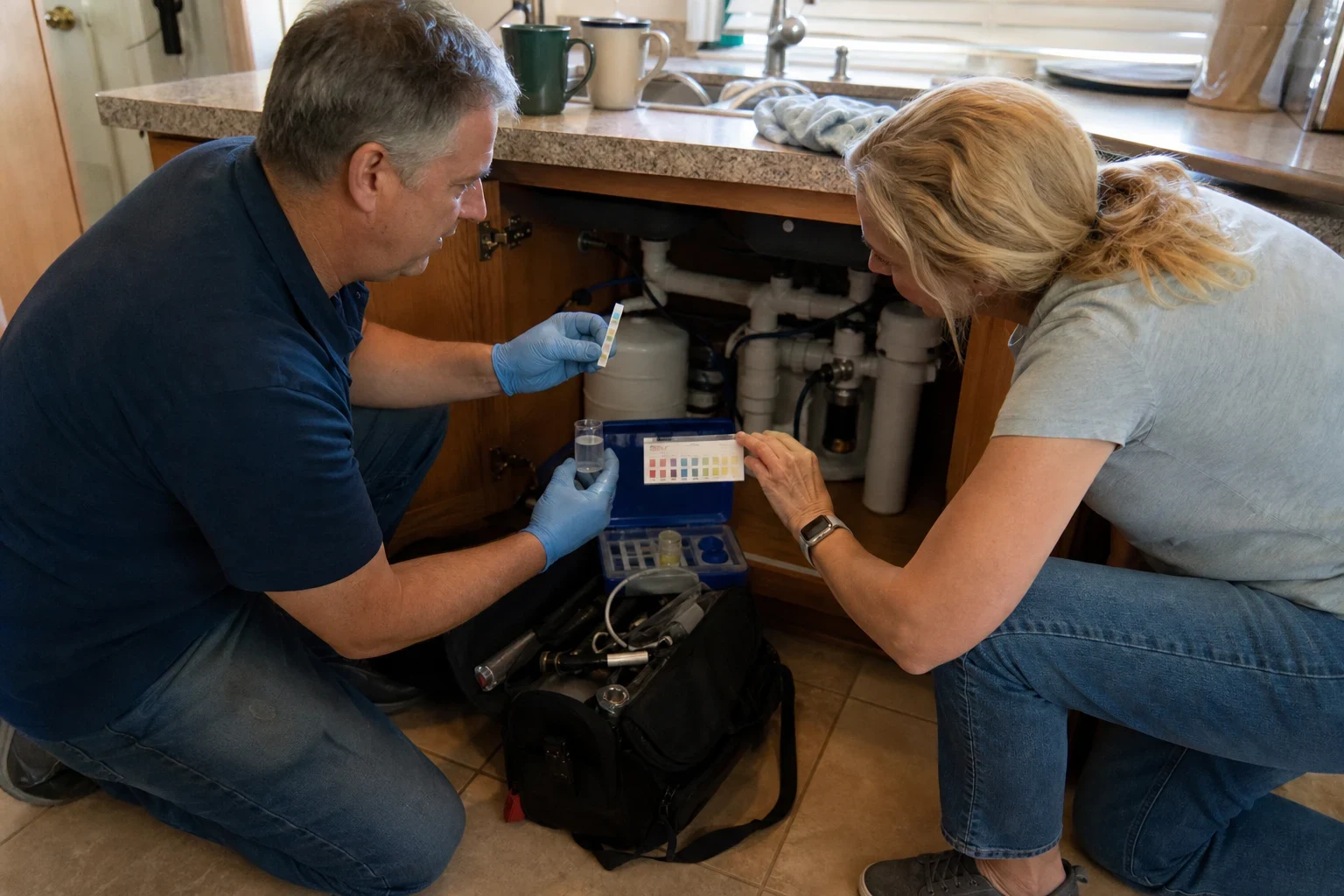
First we make sure the right filters went in and were flushed properly. If taste or odor persists, water testing is the next step, so we know what's actually in the water before suggesting any change to your setup.
Do I need to be home during the visit?
Usually yes, because most systems sit under a kitchen sink or inside a closet or garage. The visit is short, and we leave the area as clean as we found it.
Find out what your filters need
Give us a rough idea of your setup and the last time anyone changed the filters, even if it's a guess. We'll line up the right parts, pick a time with you and remind you when the next change comes around.