ServicesUnder-sink reverse osmosis
Under-Sink Reverse Osmosis in Sunnyvale
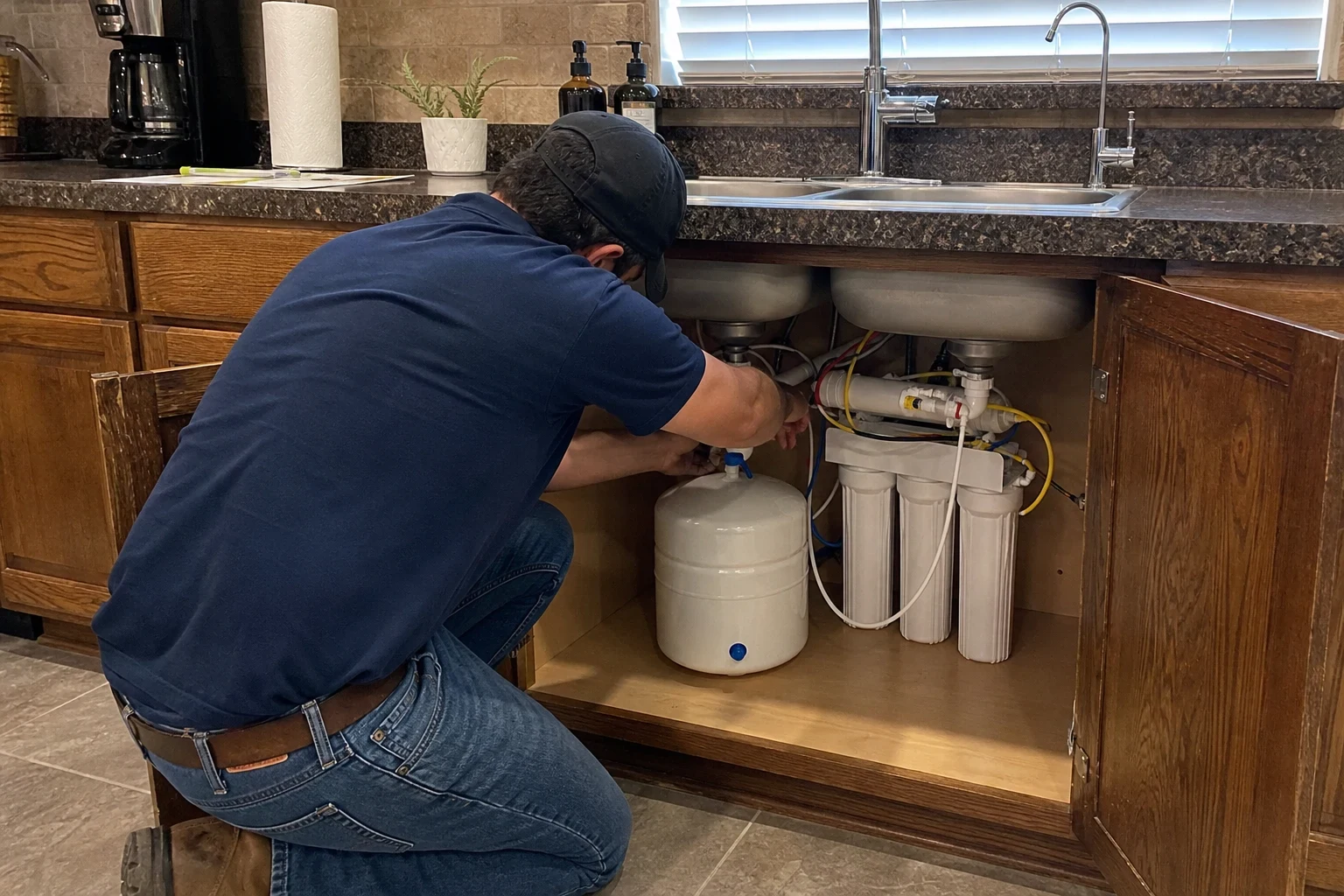
If you want drinking and cooking water you feel good about, a reverse osmosis system under your kitchen sink is a practical way to get it. We help you decide if it fits, install it neatly and show you how to keep it running well.
What reverse osmosis does at your sink
Inside a reverse osmosis unit, your household water pressure forces water across a tightly woven membrane. Most dissolved minerals, metals and trace contaminants can't get through, so they are rinsed away instead of ending up in your glass. Carbon cartridges on either side of the membrane handle chlorine taste and odor. What reaches the small dedicated faucet is water ready for drinking, coffee, ice and cooking.
This system makes the most sense when you care most about what you drink and cook with, rather than what comes out of the shower head. People usually call us about lead worries from older fixtures or plumbing, a taste they can't get used to, a test result they want to act on, or a wish for more assurance than plain tap water gives. If the trouble runs through the whole house, like a chlorine smell in the shower or stains on fixtures, whole-house carbon filtration or iron and sediment filtration may be the better fit.
From your first question to the last wipe-down under the sink, you deal with one person. That person looks at your setup, explains the choices and comes back if anything needs a second look.
What your installation includes
- A look under your sink first
- We check space, water pressure, the drain line and where a faucet can go. Reverse osmosis works best with steady pressure, so we measure it before recommending a system.
- Four filter stages, explained
- Water first passes a sediment cartridge that traps grit, then a carbon cartridge that shields the membrane from chlorine. The membrane does the heavy lifting, and a final carbon filter polishes the taste. We tell you in plain words what each part catches.
- A dedicated drinking water faucet
- We mount the faucet in an existing sink hole or drill a new one. Stone and quartz counters need a careful drill, and we tell you up front if that applies.
- Storage tank and drain connection
- The tank sits under the sink and holds filtered water so a glass fills quickly. A drain saddle carries rinse water from the membrane to your drain line.
- A line to the refrigerator, if you like
- Plenty of people want the same clean water in their ice and fridge dispenser. We can run tubing over to it on install day so you don't need a second visit.
- Leak check and walkthrough
- We flush the system, check every fitting, and show you how to spot a filter that is due for a change.
When reverse osmosis is worth it
Cases of bottled water keep piling up
Hauling bottles home every week adds up in cost and pantry space. Filtered water from your own faucet replaces most of that.
Your home has older plumbing or fixtures
Lead usually comes from old pipes, solder or faucets inside a house, not from the city supply. A reverse osmosis membrane catches most of it right before the water reaches your glass.
Coffee or tea tastes off
Chlorine and dissolved minerals change flavor. Many people notice the difference in the first cup.
A water test showed something you want to address
If our water testing turned up high dissolved solids or a contaminant of concern, RO is often the most direct fix for drinking water.
White spots on kettles and glassware
Mineral film on dishes and a crusty kettle point to dissolved solids that the membrane removes.
What to expect, step by step
- 1
Start with a phone call
Let us know what bothers you about your water. If a test should come before any equipment talk, we'll tell you.
- 2
An in-home look and written estimate
We check the cabinet, your water pressure and your countertop, then write up an estimate that itemizes every part and the labor.
- 3
The install
Most jobs wrap up in a few hours. We lay out a towel and mat, shift only the cabinet items in our way, and turn your water off just for the few minutes the hookups take.
- 4
Flushing, checking and tidying up
We flush the fresh filters, look for drips and put the cabinet back the way it was. We take all packaging with us.
- 5
The same contact afterward
If questions come up later, you call the person who did the install. When it's time for new filters, our filter replacement and maintenance service makes it easy.
What moves the cost
No two kitchens are set up quite the same, so we wait to price until we've looked under your sink. You get a written, itemized estimate, and nothing gets added on install day unless you say yes. These are the things that change the total.
- System type and stages
- A basic four-stage system costs less than one with a remineralizing stage, a tankless design or a pump for low pressure.
- Countertop material
- Using an existing hole is simplest. Drilling stone or quartz takes more time and the right bit.
- Water pressure
- If pressure is low, a permeate or booster pump helps the membrane work properly and wastes less water.
- Fridge or ice maker hookup
- Sending filtered water on to your refrigerator takes more tubing and time, especially when the fridge sits across the kitchen from the sink.
Reverse osmosis questions we get
Something not covered here? (972) 597-4653
Does an RO system waste water?
Some, yes. Each time the tank refills, the unit rinses a share of water to the drain to keep the membrane clear. Newer models and permeate pumps cut that amount a good deal, and we can explain those options.
How much cabinet space does it need?
Not much. The tank and filters typically sit next to your trash bin or cleaning supplies. We measure the space before suggesting a model, so nothing catches you off guard.
When do the filters need replacing?
Most homes change the prefilters and polishing filter roughly once a year, with the membrane lasting longer. The timing depends on your water and usage, and we'll explain the signs to look for.
Will RO strip out good minerals?
It does remove most calcium and magnesium along with the rest. Most people get those minerals from food anyway. If you like a bit of mineral taste, an optional cartridge after the membrane adds a little back.
Is it worth testing my water first?
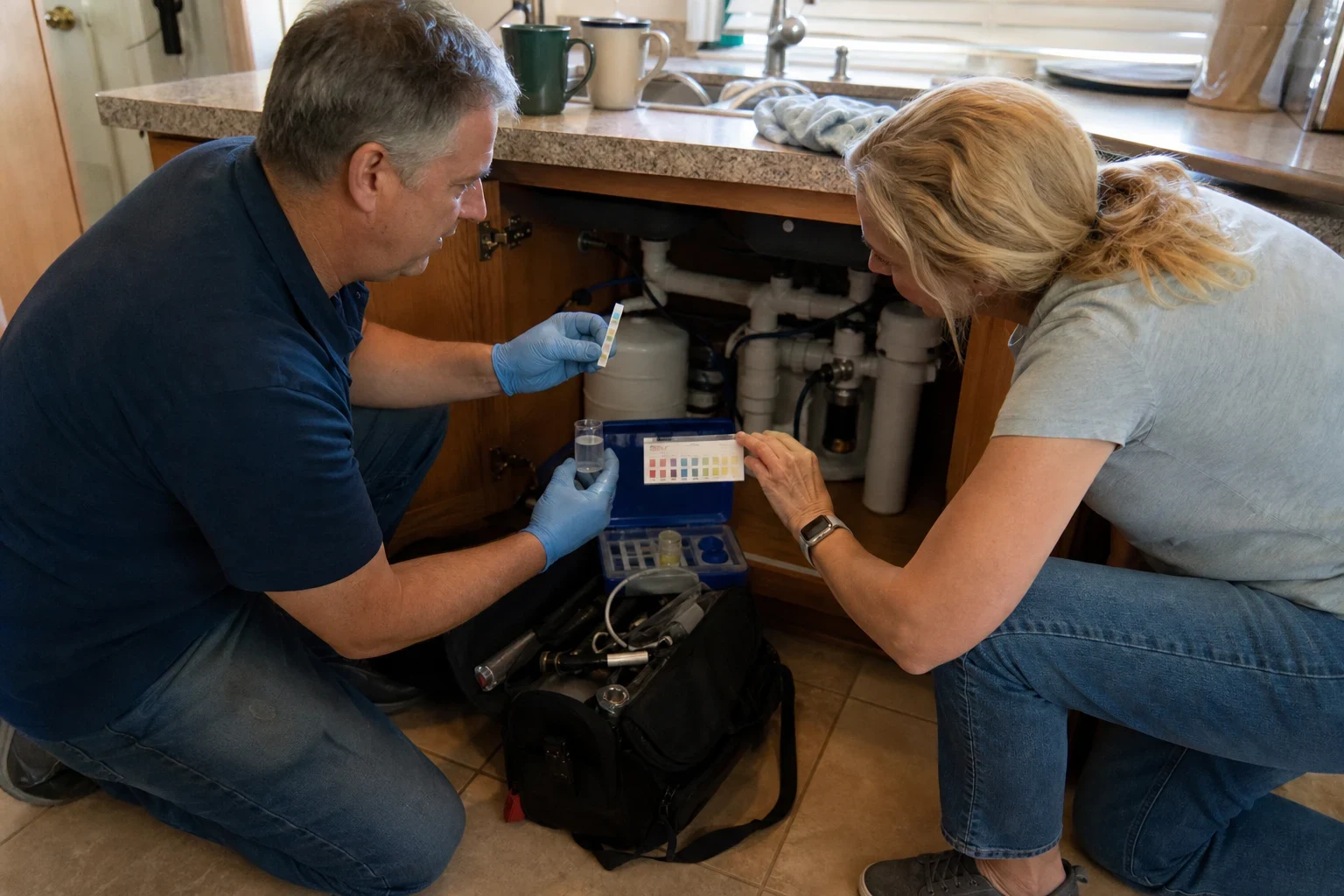
Yes, it helps. Knowing what's in your water means you pay only for what you need. If you already have results, have them ready when we talk and we'll review them together.
Let's talk about the water you drink
Share what you'd like to change about your drinking water, and we'll give you a straight answer on whether reverse osmosis is the right fit. We work in Sunnyvale and nearby towns like Mesquite, Garland and Rowlett.