ServicesWater testing
Water Testing in Sunnyvale, TX
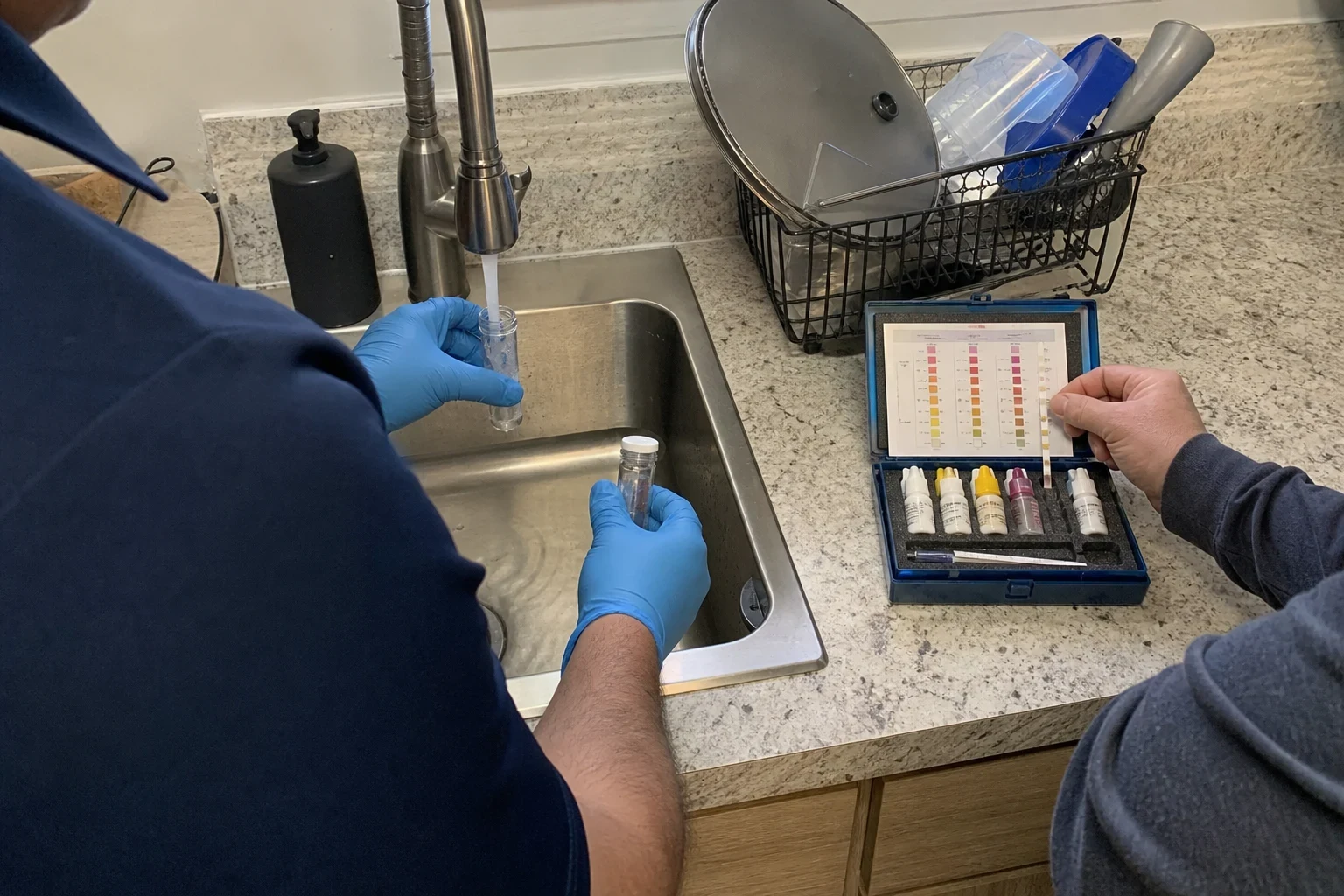
A filter only helps if it targets something that is really in your water. We test at your tap, put the results in plain language and give you an honest answer on whether treatment is worth it. The same person handles your questions from the first call to the final results.
Know what's in your water before you buy anything
Public water systems have to meet federal and state drinking water standards before water reaches your street. What changes things is the trip through your home: older pipes and fixtures, a water heater holding sediment, or a faucet that sheds metal. Taste, odor, spots on glasses and stains in the tub each point to different causes, and the fix for one does nothing for another.
That is why every job starts with a test. Our tap readings cover hardness, iron, chlorine, pH and total dissolved solids, the numbers that decide whether any equipment is worth buying. When the question calls for it, such as lead from older plumbing or water from a private well, we send samples to an independent lab. A clean result is a perfectly good outcome, and we report it that way, with no equipment pitch attached.
You deal with one person the whole way. The same contact who takes your call schedules the visit, collects the samples, walks you through the results and answers your follow-up questions.
What a water test from us covers
- 01
In-home screening
We test at the kitchen tap and, when it helps, at a second fixture or where water enters your home. Readings for hardness, chlorine, pH, iron and total dissolved solids happen on the spot, so you see the numbers as we get them.
- 02
Independent lab samples
For lead, bacteria or a broader contaminant panel, we collect samples following the lab's instructions and send them out. Lab results take longer than a tap test, and we tell you the expected wait up front.
- 03
A look at your plumbing
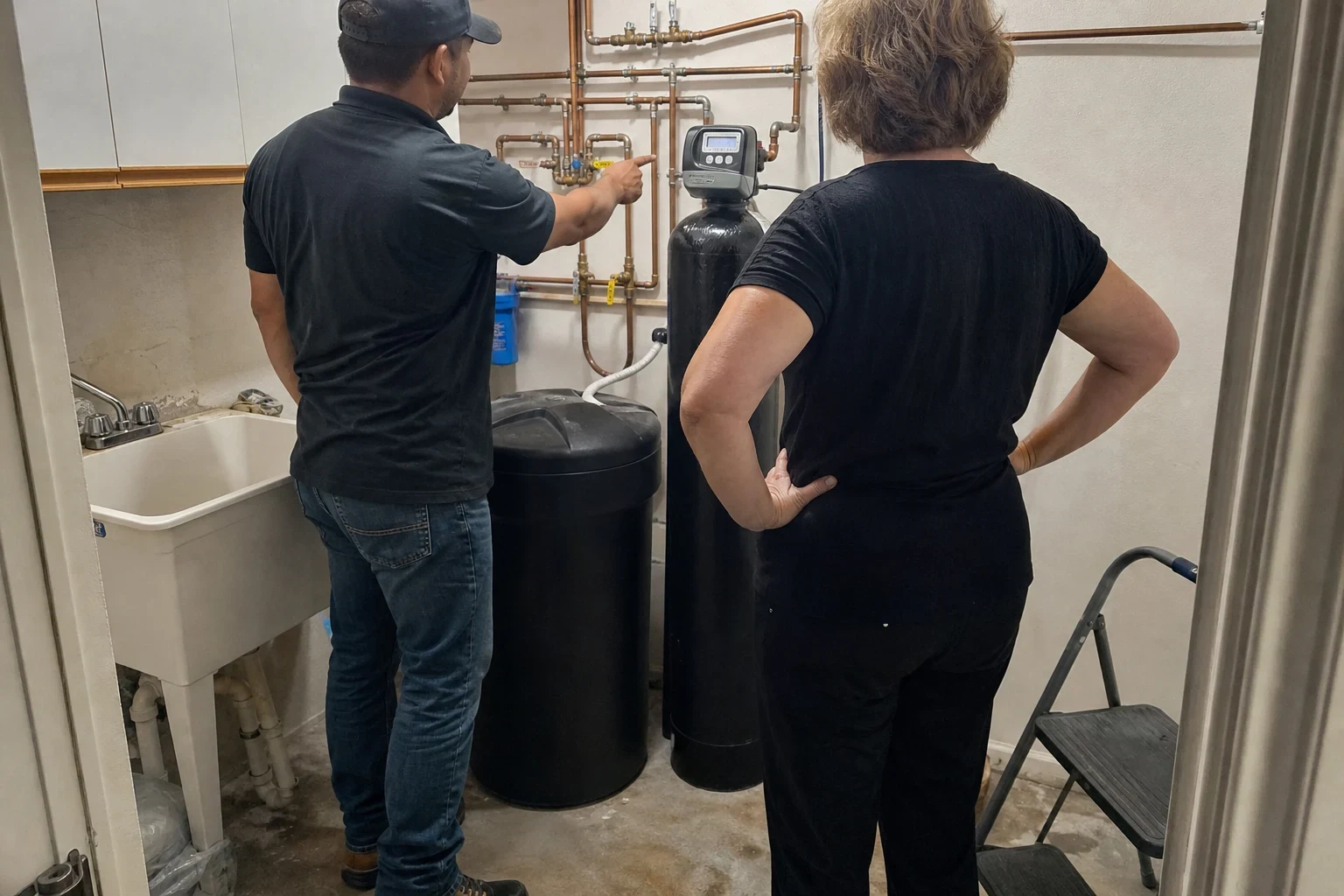
We note pipe material where it's visible, the age of the water heater and any filters or softeners already in place. Those details often explain a result better than the water alone.
- 04
Results you can read
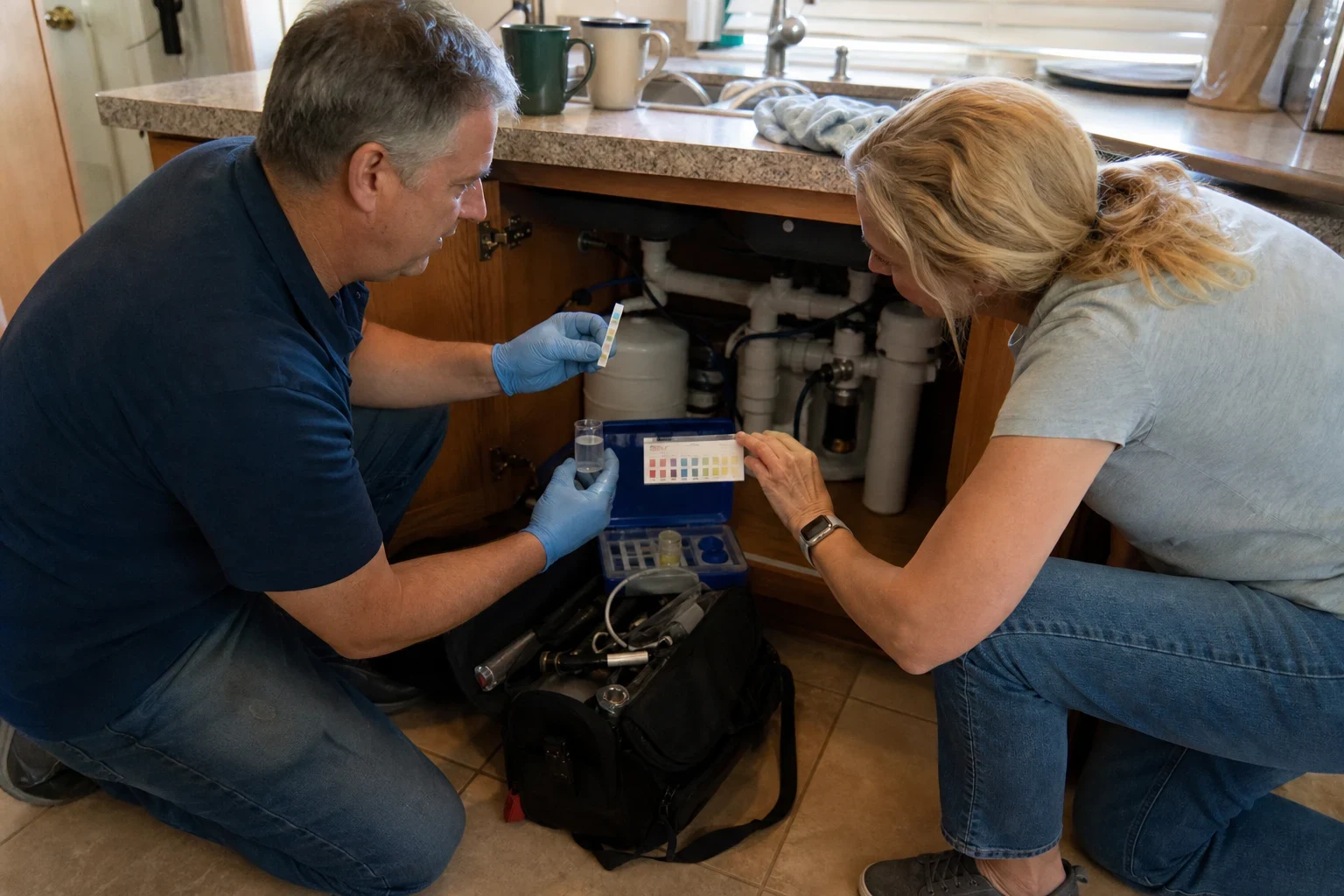
You get the readings written down with what each one means for your home. We point out which results matter and which are perfectly normal.
- 05
An honest recommendation
If treatment makes sense, we explain which option fits the problem, from under-sink reverse osmosis to whole-house carbon filtration. If it doesn't, we say so and leave it there.
Questions about Water testing?
Call(972) 597-4653Signs it's time to test your water
Chlorine taste or smell
Water that smells like a pool or tastes off in coffee is common with treated city water. A test confirms the level and whether a carbon filter would help.
Spots, scale or crusty fixtures
White film on shower glass or scale in faucet aerators points to minerals. A hardness test tells you whether a softener is worth it or a simple cleaning routine will do.
Orange or brown stains
Rust-colored stains in sinks, toilets or laundry usually mean iron in the water or corroding pipes. Testing separates the two, which decides between iron and sediment filtration and a plumbing repair.
Older or unknown pipes
If you aren't sure what your pipes are made of, a lab lead test gives you a clear answer. That answer is especially worth having when there's a baby, a toddler or a pregnancy in your home.
A new baby, home or well
Big changes are a good time for a baseline. Private well water should be lab tested, since no utility monitors it for you.
A quote for equipment
If someone has quoted you a system, test first so you know it targets a problem you actually have.
How a testing visit goes
- 1
A phone call to start
Tell us what you're noticing and what worries you. We suggest which tests make sense and explain the cost before anything is scheduled.
- 2
Sampling at your home
We arrive at the time we set, test at the tap and collect any lab samples. We don't move furniture or open walls; we just need a faucet and, ideally, access to where the water line comes in.
- 3
Results explained
We go over the on-site readings with you before we leave. When lab results come back, the same person who visited calls to walk you through them.
- 4
Next steps, if any
If a filter or softener fits, you get a written estimate. If not, you keep a record of your water to compare against later.
What affects the cost of water testing
The cost depends on how much you want to know. A basic tap screening for common issues is the simplest option, while lab panels add expense for the outside analysis. We explain the choices by phone so you can decide before we schedule.
- On-site versus lab testing
- Readings we take at your tap cost less than samples analyzed by an independent lab. Lab work is the right call for lead, bacteria and anything that needs precise measurement.
- How many things we check
- A focused test for hardness or chlorine is narrower than a broad panel. We help you pick tests that match what you're seeing, not every test available.
- Well or city water
- Private well water usually needs a wider panel, including bacteria, because nobody else is testing it.
- Follow-up testing
- Retesting after a filter goes in or a pipe is repaired adds a visit, but it confirms the fix actually worked.
Water testing questions
Isn't city water already tested?
Yes. Public water systems test regularly and publish an annual water quality report. Those samples are taken in the system, not at your faucet, so they can't show what your pipes, fixtures or water heater add. Our test looks at the water you actually drink.
Will you push a system on me after the test?
No. We tell you what the results show, and plenty of homes need nothing or only a simple drinking water filter. If treatment is worth it, we explain why and give you a written estimate. The decision stays yours.
How long do results take?
Tap readings are ready during the visit. Lab results take longer depending on the panel, and we give you the expected timing when we collect the samples.
Do I need a water softener?
Not automatically. Hardness varies from home to home, and a softener only makes sense when a hardness test supports it. We measure first and bring up water softeners only if the number calls for one.
Do I need to be home for the visit?
Yes, or someone who can let us in. We need access to a faucet and a few minutes at the end to explain what we found.
Do you test outside Sunnyvale?
Yes. We also test water in Mesquite, Garland, Rowlett, Forney and other nearby communities. Our Service Areas page lists where we work.
Find out what's really in your tap water
Tell us what you're noticing and we'll suggest the right test. You'll talk with the same person from the first call until your results are explained.