ServicesIron and sediment filtration
Iron and Sediment Filtration in Sunnyvale
Rust-colored stains, gritty aerators and cloudy glasses usually trace back to iron or sediment. We test your water, explain what is causing the problem and install a filter that catches it before it reaches your fixtures. One person handles your job from the first call to cleanup.
What this filtration does for your home
Sediment is the loose stuff: sand, silt, pipe scale and rust flakes that travel with the water. Iron can be visible as particles or dissolved and invisible until it meets air and turns orange. Both leave stains on sinks and laundry, clog faucet screens and wear down the valves in your water heater, dishwasher and washing machine.
A sediment filter strains out particles by size. Dissolved iron needs a different approach, usually a media that oxidizes it so it can be trapped and flushed away. Picking the wrong one wastes money, which is why we test before we recommend anything.
The person who tests your water is the same person who explains the options, schedules the install and calls you afterward. You will not be passed between a salesperson, an installer and an office.
Everything that comes with the job
Testing comes first
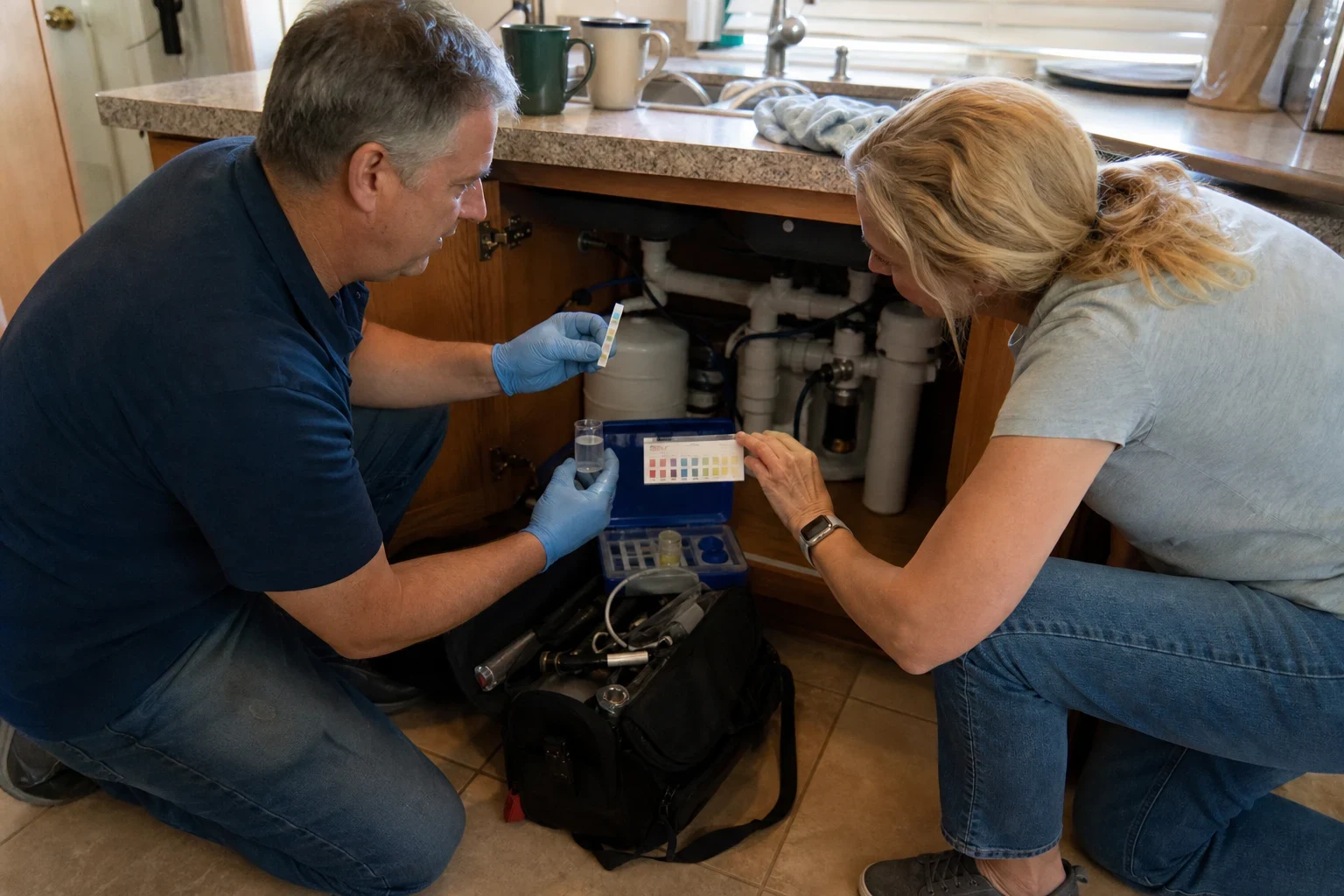
Before we price anything, we measure iron, sediment and the readings that decide which filter will actually work, such as pH and hardness. You get the numbers along with a plain explanation of each one. For a deeper lab panel, our water testing service can handle it.
A filter matched to the problem
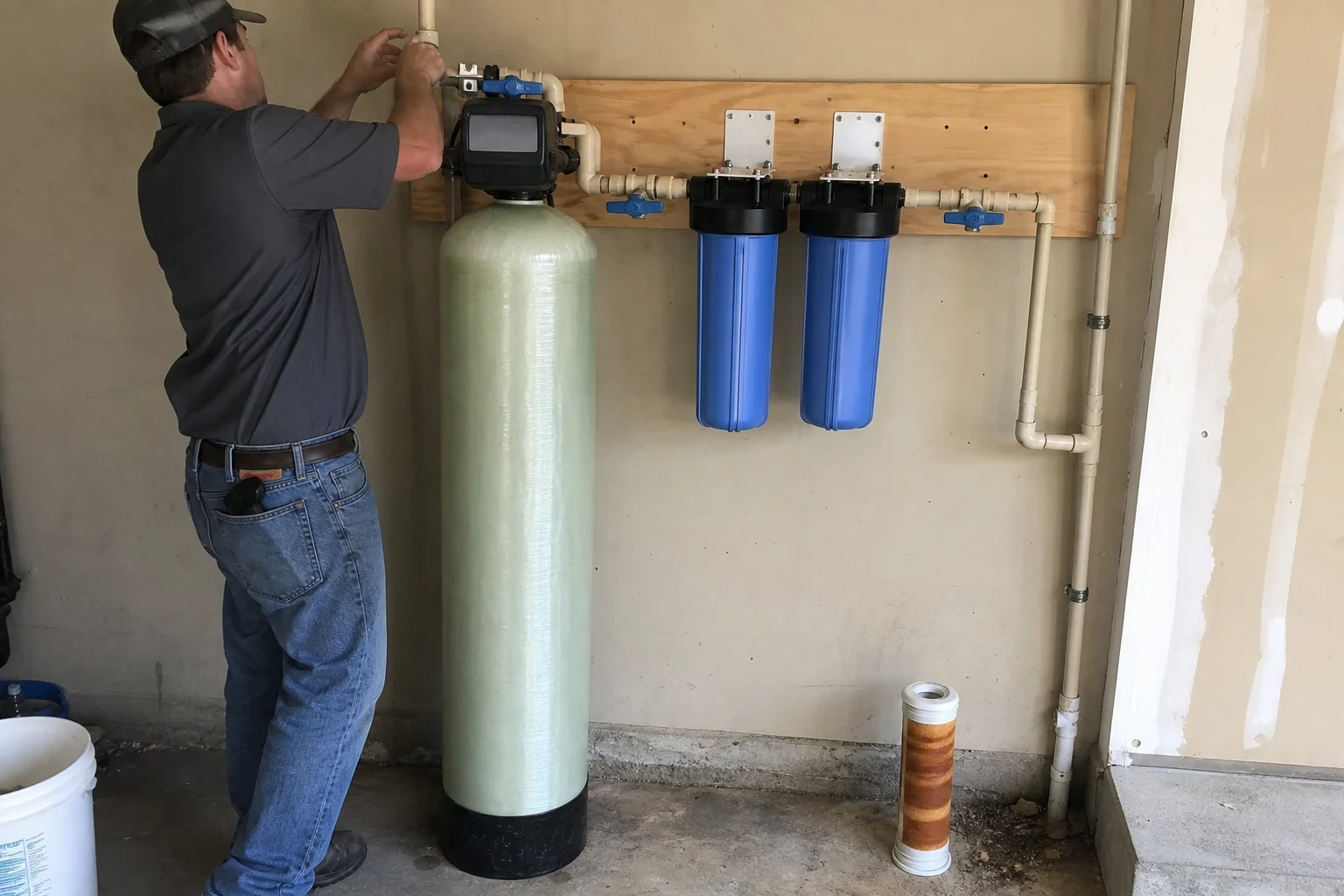
Particle problems get a sediment filter with the right micron rating. Dissolved iron gets an oxidizing or iron-specific media system. Some homes need both, with the sediment stage first so it protects the iron media.
Installation at the main line
We install the system where water enters your home, usually in the garage or near the water heater, so every tap and appliance gets filtered water. Bypass valves go in so you can keep water running if the filter ever needs service.
A written, line-item estimate
Equipment, parts, labor and any plumbing changes are listed separately. If something changes once we open the wall or the line, we tell you before doing the extra work.
Cleanup and a walkthrough
We lay down drop cloths, haul away packaging and old parts, and show you how the system works, including how to read its gauge and when it will need attention.
When iron or sediment is the likely culprit
Rust stains that keep returning
Reddish rings in the toilet bowl, streaks down the tub and white towels slowly going yellow all point toward iron. You scrub them clean, and within a week they are back.
Grit in aerators and showerheads
If you unscrew a faucet screen and find sand or flakes, sediment is moving through your pipes. Low pressure at one fixture is often the first clue.
Cloudy or tinted water
Water that looks hazy, or clear from the tap but turns orange after sitting in a glass, usually carries dissolved iron.
A metallic taste
Iron gives water and coffee a tinny flavor even at levels too low to stain much.
Appliances clogging early
Ice makers that jam, washer inlet screens full of debris or a water heater that rumbles from built-up sediment can all mean particles are getting through.
How the job goes
- 1
Phone call
You tell us what you are seeing. We ask a few questions about your water source, the age of your plumbing and when the problem started, then set a time to visit.
- 2
Test and recommendation
At your home we test the water, look at your plumbing layout and pick the install spot. You get an honest answer, including when a simple sediment cartridge is all you need.
- 3
Installation
For most systems, plan on a few hours of work rather than a full day. The water is shut off only while we cut the system into your line. We give you a heads-up before it goes off and again once it is back on.
- 4
Flush and retest
We flush the new system, check for leaks and retest the water so you can see the difference before we leave.
- 5
Follow-up
We check in after you have lived with it for a bit. When cartridges or media need changing, filter replacement and maintenance runs through the same contact.
What affects the cost
Two things set the price: what the test finds in your water and how easy your main line is to reach. A simple sediment filter is a smaller job than a full iron removal system. You get a written estimate after testing and see the total before any work begins.
- Type and amount of iron
- Particle iron can often be caught with sediment filtration. Higher levels of dissolved iron need a larger media tank and sometimes a backwash setup, which costs more.
- Water flow and household size
- A system has to keep up with showers, laundry and irrigation running at once. Bigger demand means a bigger filter.
- Install location and plumbing
- An open main line in the garage is simpler than one that needs rerouting, a drain added for backwash or a power outlet run to the spot.
- Ongoing maintenance
- Cartridge filters need regular changes. Backwashing media systems need less hands-on care. We explain the upkeep for each option so the long-term cost is clear.
Iron and sediment filtration questions
Something not covered here? (972) 597-4653
Is iron in my water a health risk?
Iron at the levels that cause stains is mainly a nuisance, affecting taste, laundry and fixtures. It can also feed iron bacteria, which cause slimy buildup and odors. Testing tells us what you are dealing with so we can address it properly.
Will a water softener remove iron?
Only in small amounts. Softener resin can grab a little dissolved iron, but over time the iron coats the resin and shortens its life. If your test also shows real hardness, we may put an iron filter in front of a softener. We only recommend water softeners when a hardness test backs it up.
How often do filters need changing?
Most homes swap a sediment cartridge a few times a year. If your water is especially gritty, expect to change it more often. A pressure gauge on the housing drops as the cartridge fills, so you can see when it is time. Backwashing iron systems clean themselves on a schedule and need media replaced much less often.
I am on city water. Can I still get sediment?
Yes. Main breaks, line repairs and aging pipes inside your home can all send rust and sediment to your taps. A whole-house sediment filter catches it before it reaches appliances.
Will this fix chlorine taste too?
Iron and sediment filters are not built for chlorine. If taste or odor bothers you, whole-house carbon filtration can be added after the sediment stage, and we can plan both at the same visit.
Find out what is staining your sinks
Describe the stains or grit you have noticed, and we will book a visit to test the water in your home. The person who runs that test is the one who explains the results and your choices.