ServicesWhole-house carbon filtration
Whole-House Carbon Filtration in Sunnyvale
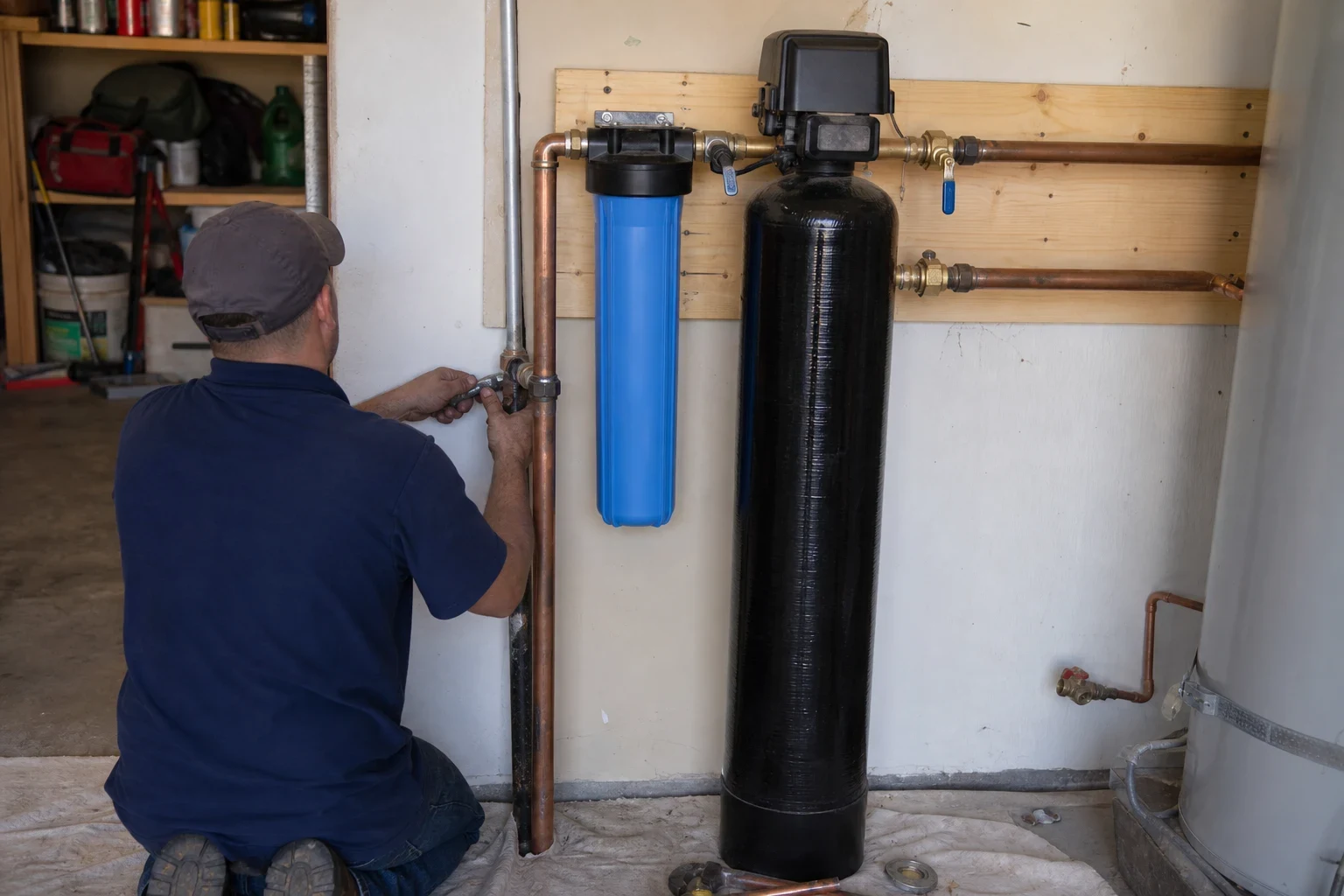
Chlorine you can smell in a glass of water, or catch in the steam of a hot shower, is the complaint we hear most. A whole-house carbon filter treats water once, at the main line, so every faucet benefits. One person on our team plans, schedules and checks the work.
How carbon filtration at the main line works
Utilities add a disinfectant to keep tap water safe through miles of pipe, and that disinfectant is usually the taste and smell people notice. Installed where water enters your home, a carbon filter grabs chlorine and many organic compounds before they reach a single faucet. Showers, the washer, the fridge and the kitchen sink all draw from the same filtered supply.
It is the right fit when your main complaints are taste, odor or dry skin after showering. It is not a softener, and it is not the best tool for lead from old fixtures. For drinking water with extra protection, we usually pair it with under-sink reverse osmosis.
You deal with the same person from the first phone call to the final walkthrough. That person knows your water, your plumbing and what was promised, so nothing gets lost between visits.
What the job includes
- 01
A look at your main line
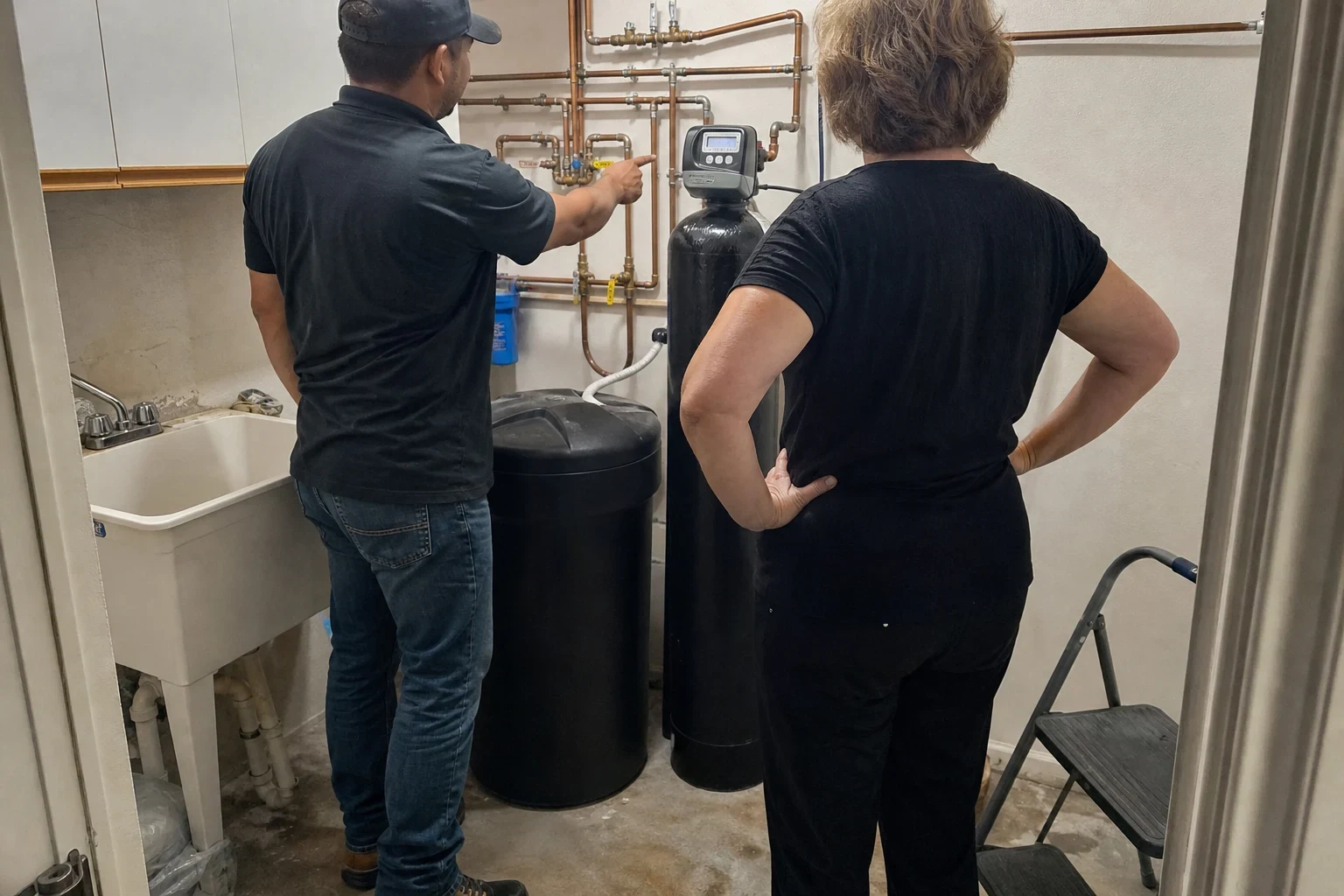
We find where water enters your home, check the pipe size and material, and look for room to mount the system and service it later.
- 02
Carbon matched to your water
Ordinary activated carbon does a good job on chlorine. Some suppliers disinfect with chloramine instead, which ordinary carbon struggles with, and in that case we suggest catalytic carbon built for the job. We confirm which one your supplier uses before recommending anything.
- 03
A sediment prefilter
A simple prefilter catches grit before it reaches the carbon, so the carbon lasts longer and keeps working at full strength. If sediment is your bigger problem, our iron and sediment filtration page covers that in more detail.
- 04
Bypass and shutoff valves
We install valves so the filter can be bypassed for service without shutting off water to your whole house.
- 05
Flushing and testing
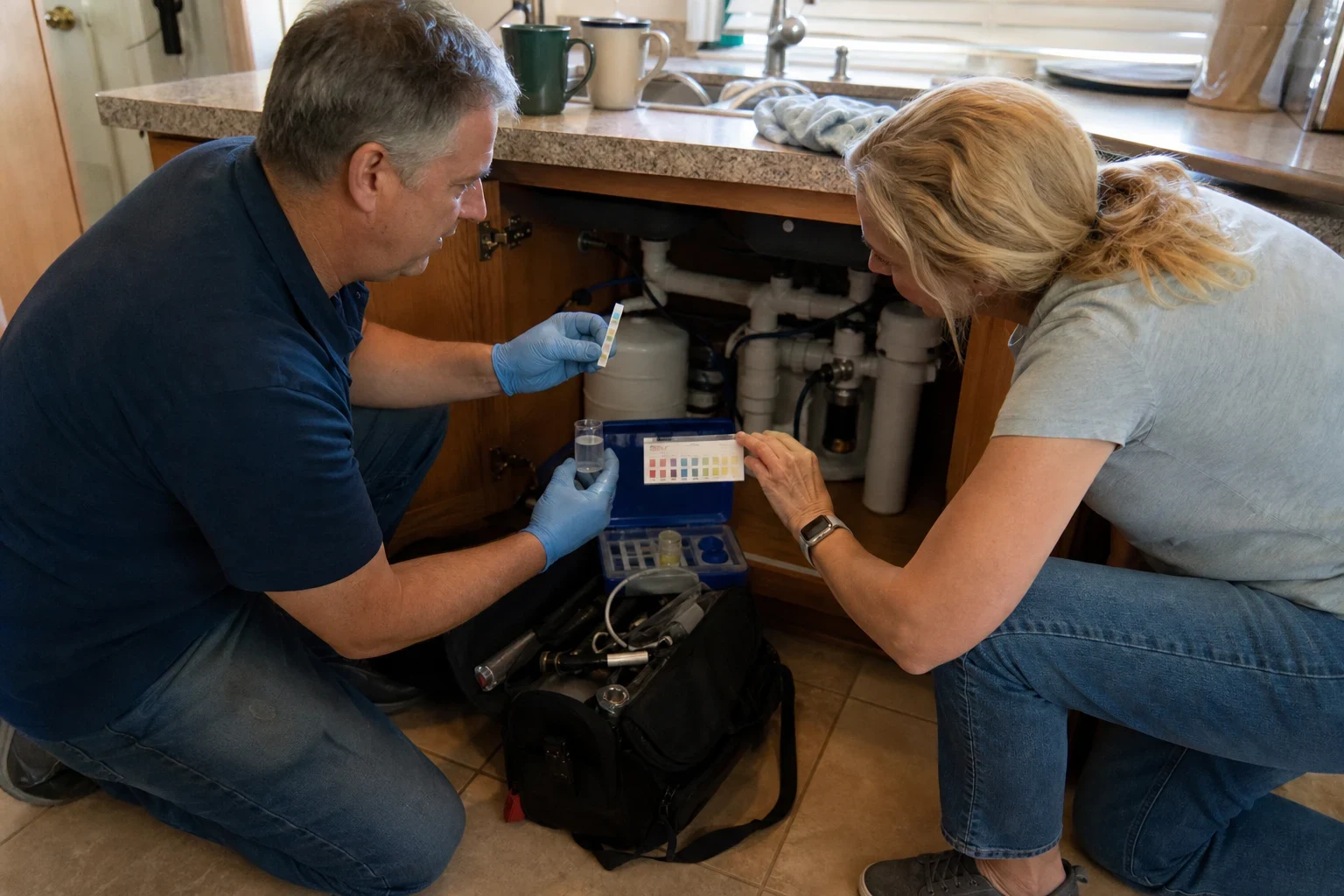
New carbon releases fine black dust at first. We flush it out before we leave and check for chlorine at a faucet to confirm the system is working.
- 06
Cleanup
Old fittings, packaging and any water on the floor leave with us.
Questions about Whole-house carbon filtration?
Call(972) 597-4653Signs a whole-house carbon filter could help
A bleach smell at the tap
If a glass of water smells like a pool, carbon is the most direct fix.
Showers that dry you out
Some people notice itchy skin or dull hair from chlorinated shower water. Filtering at the main line treats every shower at once.
Coffee and ice taste off
Chlorine changes the flavor of coffee, tea and ice. Filtering the whole house means the fridge and coffee maker get clean-tasting water too.
Pitcher filters you keep refilling
If you are buying cartridges every few weeks and still smell chlorine in the bathroom, a single system on the main line may cost you less effort over time.
Taste that shifts through the year
Some people find the chlorine smell comes and goes, often more noticeably in hot weather. A carbon system evens it out so your water tastes the same in July as in January.
How the work goes
- 1
A phone call and a free estimate
Tell us what you notice in your water. We visit, look at your plumbing and give you a written line-item estimate. If we think water testing should come first, we will say so.
- 2
Choosing the system
We explain the difference between cartridge housings and larger carbon tanks, and which one suits your household size and water use. You pick, with no pressure to go bigger than you need.
- 3
Install day
Many area homes sit on slab foundations, so the main line often comes in near the garage or an outside wall. We shut the water off for a few hours, cut in the system and valves, and protect the floor while we work.
- 4
Flush, check and walkthrough
We flush the new carbon, test the treated water, and show you the bypass valve and how to tell when filters are due. Your contact stays your contact for any questions afterward.
What moves the price
Every home is plumbed a little differently and every household uses a different amount of water, so there is no one price for this system. Once we have seen your setup, we put the estimate in writing with equipment and labor broken out separately, so you can see exactly where the money goes. These are the things that change the number most.
- Type and size of system
- Cartridge housings cost less up front but need more frequent changes. Larger carbon tanks cost more to start and last longer between media changes. Bigger households with more bathrooms need more flow capacity.
- Standard or catalytic carbon
- Catalytic media is priced higher than ordinary carbon. We put it in only when your supplier treats with chloramine.
- Location of the main line
- A line that enters through an open garage wall is quick to work on. One hidden behind drywall, or a spot outside that needs a cover against sun and freezes, takes more labor and materials.
- Plumbing changes
- Old or undersized pipe, missing shutoff valves, or the need for a drain line for a backwashing tank all add parts and time.
Questions about whole-house carbon filtration
Is my city water unsafe without a filter?
Usually not. Your utility has to meet federal and state rules before water ever reaches your street. What carbon adds is better taste and smell, more comfortable showers and less of certain compounds you might prefer to avoid. We will never use fear to sell you a system.
Will it soften my water?
No. Hardness comes from calcium and magnesium, and those pass straight through a carbon bed. If you are seeing white crust on fixtures or spots on dishes, we test hardness first and recommend one of our water softeners only when the results call for it.
Does a whole-house carbon filter remove lead?
Most whole-house carbon systems are not designed for lead, and lead usually comes from older fixtures or solder inside the home anyway, after the main line. For drinking and cooking water, under-sink reverse osmosis is the better choice.
Will I lose water pressure?
A system sized for your home's flow should cause little noticeable drop. Pressure problems usually come from an undersized unit or a clogged prefilter, which is why we size carefully and show you when to change the prefilter.
How often does the carbon need replacing?
Cartridges are typically changed every several months to a year, and tank carbon lasts several years, depending on how much water you use. Our filter replacement and maintenance service can keep track of it for you.
Ready for water that smells like nothing
Tell us what is bothering you about your water and we will set up a visit. We work in Sunnyvale and nearby towns like Mesquite, Rowlett and Forney.